Building for AI Agents: How to Structure Your Website Data for LLM Scrapers and AI Overviews
May 15, 2026
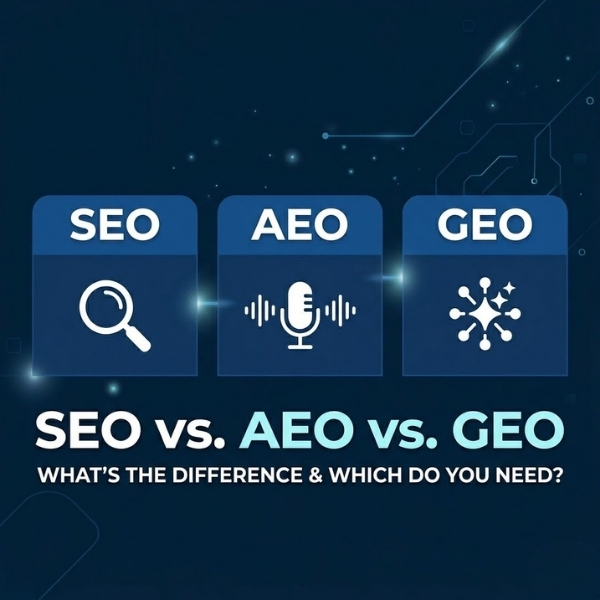
The digital ecosystem in 2026 has undergone a fundamental shift. We are no longer just designing websites for human eyes or indexing them for traditional search crawlers. We are now building for AI agents the sophisticated LLM scrapers that power ChatGPT, Perplexity, and Google AI Overviews. These agents don’t “browse” your site; they ingest, synthesize, and cite it.
If your content isn’t structured to be “citable,” your brand effectively disappears from the conversational search results that now command over 50% of top-of-funnel traffic in the USA. Transitioning to a model of Generative Engine Optimization (GEO) is no longer optional for businesses that want to remain visible in a zero-click world. By focusing on how these models parse data, you can move from being “just another link” to becoming the primary source of truth for AI-driven answers.
The Shift from Indexing to LLM Optimization
Traditional SEO focused on keywords, backlinks, and page speed to satisfy a librarian-style algorithm. In contrast, LLM optimization (or LLMO) requires satisfying a research analyst. AI agents look for high-quality, human-curated text that is logically organized and factually dense. They prioritize “Information Gain” the inclusion of unique data, statistics, or expert insights that they haven’t already seen elsewhere in their training sets.
For US-based enterprises, this means your technical architecture must be as robust as your content. Professional Website Development Services in USA are now prioritizing server-side rendering (SSR) because AI scrapers often struggle with heavy client-side JavaScript. If an agent like GPTBot or Google-Extended cannot see your content in the raw HTML, it cannot cite you.
Structuring “Truth” with Schema and Markdown
AI models thrive on structure. While they are incredibly capable of understanding natural language, providing them with a “map” of your data significantly increases the likelihood of a citation. This map is built through advanced Schema Markup and optimized document hierarchies.
The Power of Schema Graphs
Instead of using isolated schema tags, modern sites use a “Schema Graph” strategy. This involves connecting your Organization schema to your Person (author) schema and then to specific Article or Product schemas. This creates a web of trust, proving to the AI agent that the content is written by a verified expert and published by a legitimate entity. This level of authority-building is a cornerstone of the Digital Marketing Services In USA that focus on long-term AI visibility.
Content Chunking and the 40-Word Rule
LLMs extract information in “chunks.” To optimize for AI Overviews, your most important definitions and answers should follow the “40-word rule.” Start your sections with a concise, factual summary (roughly 40-60 words) that the AI can easily lift and present as a direct answer. Following this with structured data tables or bulleted lists provides the supporting evidence the model needs to verify your claim.
Technical Accessibility: Preparing for the Scrapers
Visibility begins with accessibility. In 2026, many US businesses are unknowingly blocking AI agents through outdated robots.txt files or overly aggressive firewall settings. Ensuring that bots like OAI-SearchBot and PerplexityBot have clear paths to your most valuable assets is the first step in any GEO campaign.
Furthermore, consider the “llms.txt” standard, a recently emerged protocol where you provide a simplified, markdown-based version of your site specifically for AI agents. This “fast track” allows scrapers to understand your site’s purpose and core offerings without navigating through complex UI elements or decorative assets.
| Technical Element | Impact on AI Visibility | Action Step |
| Server-Side Rendering | Critical | Ensure content is in raw HTML, not JS-dependent. |
| Schema Markup | High | Implement FAQ, HowTo, and Organization graphs. |
| Robots.txt | Foundational | Whitelist OpenAI, Anthropic, and Perplexity bots. |
| Markdown Clarity | High | Use clear H1-H3 hierarchies and concise summaries. |
Why Citations are the New Backlinks
In the era of Generative Search, the “click” is secondary to the “citation.” When an AI model cites your website, it is providing a third-party validation that is more powerful than a traditional blue link. This process, often managed by experts like Abdul Wahab Ahmad, ensures that your brand name is associated with high-authority topics in your niche.
By structuring your data for AI agents today, you are essentially “future-proofing” your digital presence. You are moving from a reactive state waiting for a user to find you to a proactive state, where you are the underlying data source for the most popular AI platforms in the world.
Frequently Asked Questions
What is Generative Engine Optimization (GEO)?
GEO is the practice of structuring website content and technical data so that it can be easily understood, summarized, and cited by AI models like ChatGPT and Google AI Overviews.
How do AI scrapers differ from traditional search bots?
Traditional bots index keywords and links to rank pages. AI scrapers ingest content to synthesize answers, looking for factual density, expert citations, and clear structural hierarchies.
Why is server-side rendering (SSR) important for AI SEO?
Many AI scrapers cannot reliably execute complex JavaScript. SSR ensures that your content is present in the initial HTML file, making it immediately readable for all agents.
What is the “40-word rule” for AI Overviews?
It is a strategy of providing a concise, 40-60 word definition or answer at the beginning of a section. This format is highly compatible with the snippets used in AI-generated responses.
How does Schema Markup help with AI citations?
Schema acts as a “translator” for machines. It explicitly tells the AI who wrote the content, when it was updated, and what entities (people, places, things) it is referencing.
Should I block AI bots from crawling my site?
Unless you have proprietary data you don’t want used in training, you should generally allow them. Blocking them ensures you will never be cited or recommended in AI search results.
What is an llms.txt file?
It is a proposed standard for a plain-text file on your website that provides a high-level summary and key links specifically formatted for large language models to ingest quickly.
Does traditional SEO still matter in 2026?
Yes. High domain authority and a strong backlink profile are still used by AI agents as “trust signals” to determine which sources are credible enough to be cited in their answers.
Can AI agents understand content inside tabs or accordions?
Often, they cannot. Content that requires a user interaction (like a click) to reveal is frequently missed by scrapers. It is better to keep your most important information “open” and visible.
How do I track my visibility in AI search?
Standard analytics tools are evolving, but current methods include tracking referral traffic from AI domains (like chatgpt.com) and using emerging GEO tracking software to monitor brand mentions.
About the Author
Abdul Wahab Ahmad is an award-winning automation specialist, Google Analytics Individual Qualified expert, and seasoned e-commerce strategist with over a decade of hands-on experience building scalable digital architectures. As the Sole Member of Stimulus Growth LLC, he bridges the gap between complex software engineering and high-performance digital marketing, helping international brands transition from fragmented legacy stacks to secure, AI-driven workflows. Through specialized consultancy in advanced search optimization, Amazon FBA mechanics, and enterprise-grade tools like n8n and Make.com, Abdul delivers data-centric systems designed for network efficiency and sovereign data control.
When he isn’t designing agentic workflows for global enterprises, he provides physical and online professional training programs to build the next generation of automation architecture professionals.
- Corporate Headquarters: Stimulus Growth LLC, 418 Broadway, Ste N, Albany, NY 12207, USA
- West Coast Operations: 8201 Camino Colegio, Apt. 65, Rohnert Park, CA 94928, USA
- Direct Line / Consultation: +1 (707) 331-6548